Graphics and display
Rotate Screen in Windows 11: Fix a Sideways or Flipped View
Written by Windows 11 Field Guide Editorial Team · Updated
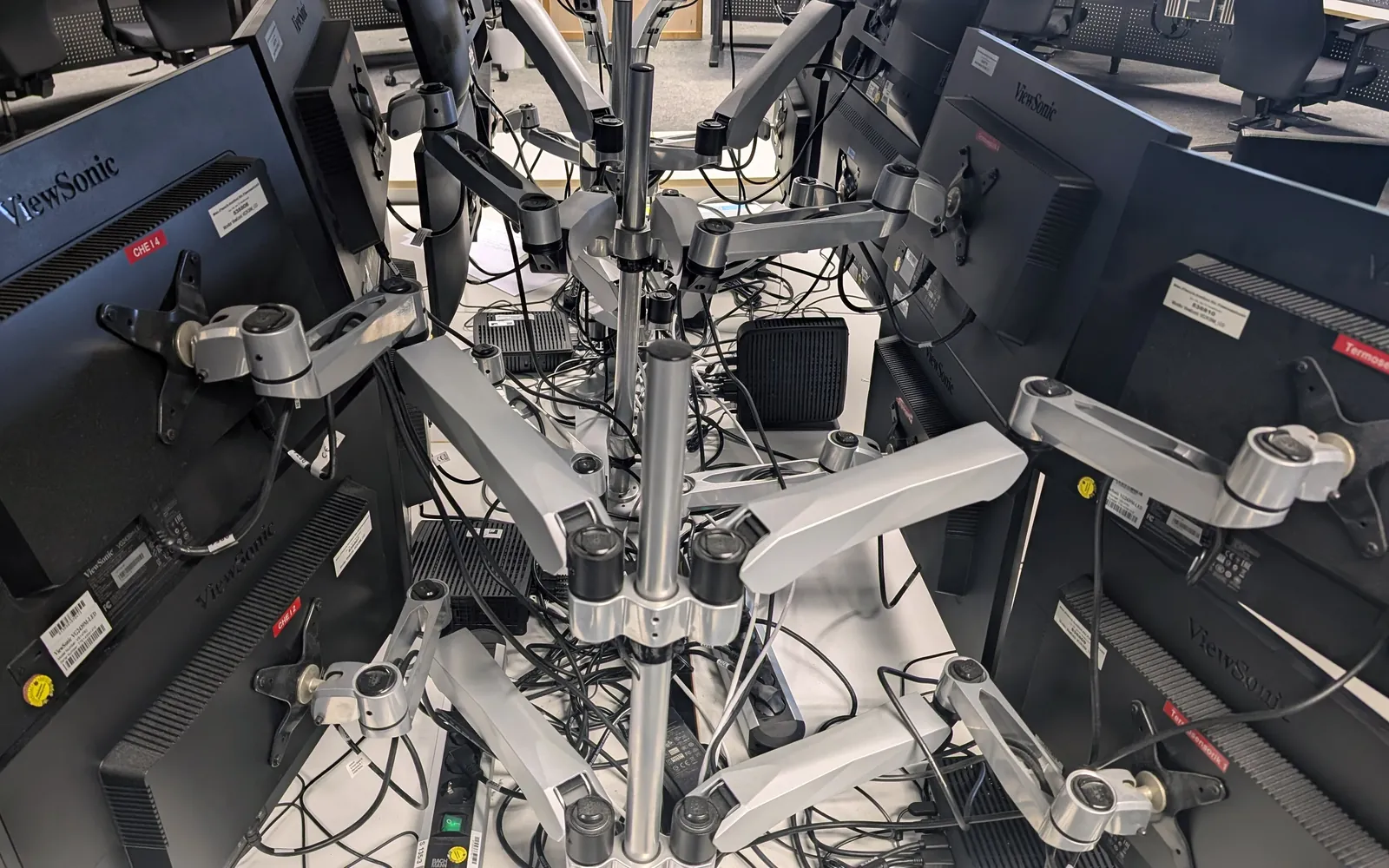
You can rotate screen output in Windows 11 from Display settings in a few seconds, whether you are fixing a display that suddenly turned sideways or setting up a monitor in portrait for reading long documents or code. The same setting handles both jobs, and it works the same way on Windows 11 Home and Pro and with Intel, AMD and NVIDIA graphics.
If your screen is sideways right now and the mouse feels backwards, do not worry: the steps below take that into account.
Rotate the screen from Display settings
- Right-click an empty part of the desktop and select Display settings. You can also press Win+I and go to System > Display.
- If more than one display is connected, select the screen you want to change in the numbered diagram at the top. Select Identify if you are not sure which number is which.
- Find Display orientation under Scale & layout and open the list.
- Choose one of the four options:
- Landscape: the normal, wide position.
- Portrait: turned 90 degrees, tall and narrow.
- Landscape (flipped): upside down.
- Portrait (flipped): tall, turned the other way.
- Windows applies the change and asks whether to keep it. Select Keep changes. If you cannot read the screen or reach the button, do nothing: Windows switches back to the previous orientation after a short countdown.
Microsoft notes that Windows recommends an orientation for each screen, and that if you set a monitor to portrait you also need to rotate the monitor physically.
Fix a sideways or upside-down screen
When the whole picture is turned, the mouse moves in the “wrong” direction because Windows has rotated its coordinates along with the image. Move slowly and use the steps above, choosing Landscape. If navigating with the mouse is too awkward:
- Press Win+R to open the Run box.
- Type ms-settings:display and press Enter. Settings opens directly on the Display page.
- Press Tab repeatedly to move to Display orientation, press Alt+Down arrow to open the list, choose Landscape and press Enter.
- When the confirmation appears, press Tab until Keep changes is selected and press Enter.
Once the screen is upright, work out why it turned so it does not happen again; the next two sections cover the usual causes.
Ctrl+Alt+arrow shortcuts
On some PCs, pressing Ctrl+Alt+Up arrow puts the screen back to normal and Ctrl+Alt+Left, Right or Down arrow rotates it. These shortcuts are not part of Windows. They came from older Intel graphics drivers, and many newer Intel drivers and most AMD and NVIDIA drivers do not include them, so on many PCs they do nothing.
If they do work on your PC, they are also the most common cause of a screen that “suddenly” turns while you are typing. Open your graphics control panel (for Intel, the Intel Graphics Command Center) and look for a hotkey setting to turn them off. If you cannot find one, use Display settings; it always works.
Rotation lock on tablets and 2-in-1s
Tablets and convertible laptops have a sensor that turns the screen as you turn the device. To stop that:
- Open Quick Settings (select the network, volume and battery icons on the taskbar, or press Win+A) and select Rotation lock. If you do not see it, select the pencil icon to add it.
- Or go to Settings > System > Display and switch Rotation lock on.
Rotation lock appears only on devices with the sensor, so desktop monitors never show it. It is usually greyed out when a detachable keyboard is attached or a convertible is in laptop mode, because the screen stays in landscape then; fold the device into tablet mode or detach the keyboard to use it. If auto-rotate has stopped working completely, check the PC maker’s support page for chipset and sensor drivers. Our Windows 11 touchscreen not working guide covers related sensor and touch problems.
Set up a portrait monitor
A monitor in portrait shows a full page of a document or many more lines of code without scrolling. To set one up:
- Check that the stand or wall mount lets the monitor pivot. Many stands only tilt.
- Turn the monitor physically, usually clockwise.
- In Settings > System > Display, select that monitor and set Display orientation to Portrait, or Portrait (flipped) if the image comes out upside down.
- Drag the monitors in the diagram so their positions match your desk. The mouse moves between screens where their edges meet in the diagram.
Text in portrait can look less crisp on some panels because of how the sub-pixels are arranged. Running ClearType Text Tuner (search for “Adjust ClearType text”) after rotating usually helps. For arranging and scaling several screens, see our Windows 11 multiple monitors guide.
If the orientation setting is missing or will not stay
- Display orientation is greyed out. This normally means Windows is using the basic display driver. Install the proper driver from the PC or graphics card maker; see Windows 11 graphics drivers.
- The setting resets after a restart or when you reconnect the monitor. Update the graphics driver, and check the graphics control panel for its own rotation setting, which can override Windows.
- A second monitor is not listed at all. Fix detection first with external monitor not detected.
- The image flickers after rotating. Try a different refresh rate in Advanced display, and see Windows 11 screen flickering.
Frequently asked questions
Why did my screen turn sideways by itself?
On a tablet or 2-in-1 the screen follows the device's sensor unless rotation lock is on. On some PCs with Intel graphics, an old driver shortcut such as Ctrl+Alt+arrow key can also rotate it by accident.
Is there a keyboard shortcut to rotate the screen in Windows 11?
Windows itself has no rotation shortcut for desktop monitors. Ctrl+Alt+arrow keys only work on some PCs where the graphics driver provides them, and newer drivers often do not.
Why is Rotation lock greyed out?
It is usually greyed out when a detachable keyboard is attached or a convertible is in laptop mode, because the screen then stays in landscape. Fold the device into tablet mode or detach the keyboard.
Can I rotate just one of my monitors?
Yes. In Settings > System > Display, select the monitor's number at the top, then change Display orientation for that screen only.
Sources
Windows 11 Field Guide Editorial Team
Editorial team
The Windows 11 Field Guide team writes and updates independent Windows 11 guides and checks each step against Microsoft's documentation and the current Settings app.